Date: November – December 2023
Location: Santiago Rusiñol Adult Education Centre, located in the Quatre Camins Youth Detention Centre. La Roca del Vallès, Barcelona.
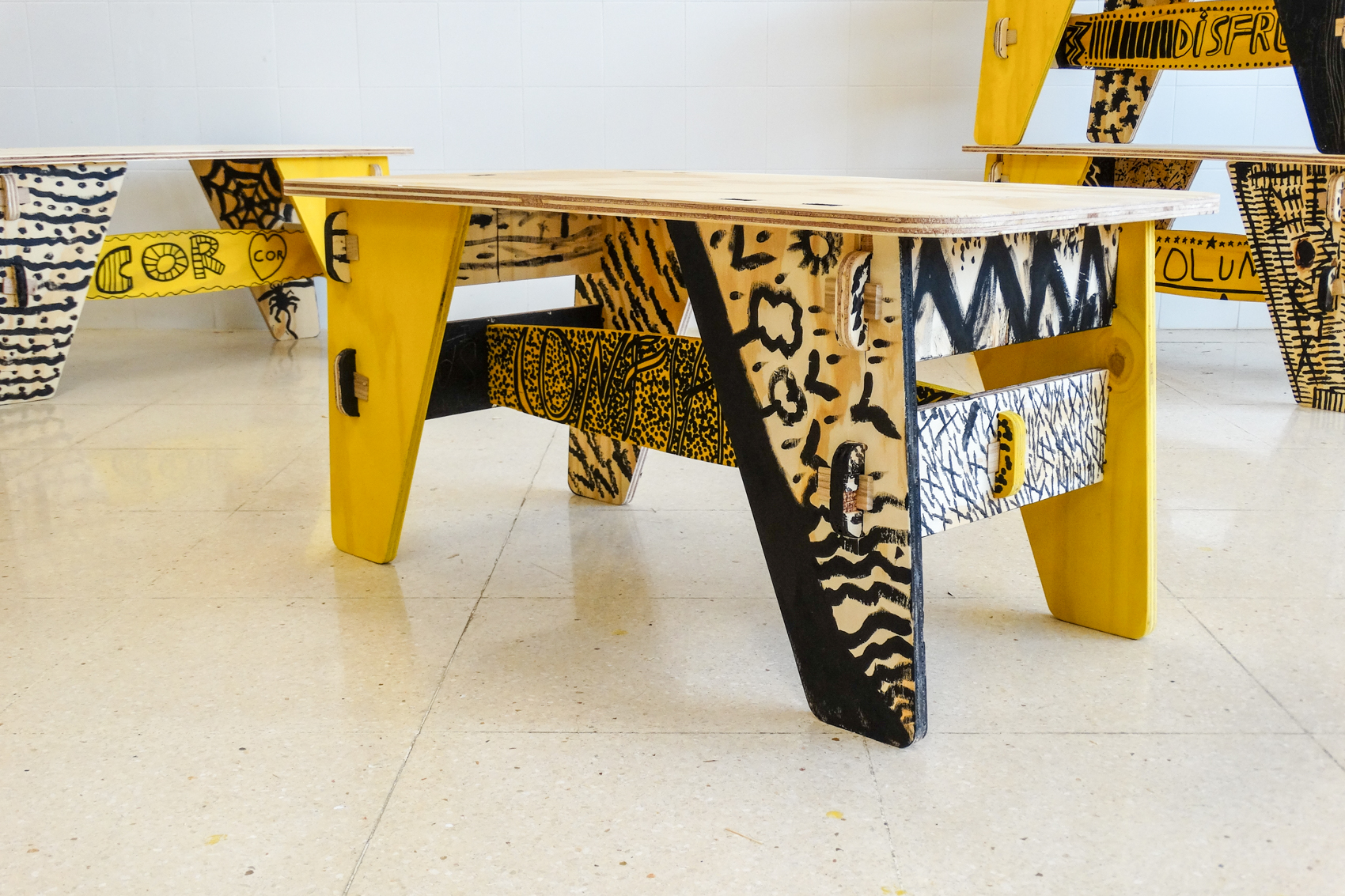
Objective: Workshop for the collective construction of wooden furniture for the training classroom at the centre with young inmates.
Receiver: Santiago Rusiñol Adult Education Centre.
With the support of: The Department of Education of the Government of Catalonia.
Contributors: Javi Manzanares (technical coordination of the Activa’t Programme), Elvira Sánchez and Judith (heads of the training centre).

The Santiago Rusiñol Adult Education Centre, located within the Quatre Camins Youth Detention Centre, needed to equip its classroom with suitable furniture to improve the learning environment. However, beyond the functional need, the main challenge was to create a meaningful educational experience for young inmates aged between 18 and 21, many of whom had restricted mobility within the detention centre itself and suffered from severe demotivation and absenteeism. The activity had to address not only training in furniture construction, but also key emotional and social aspects of their reintegration process.
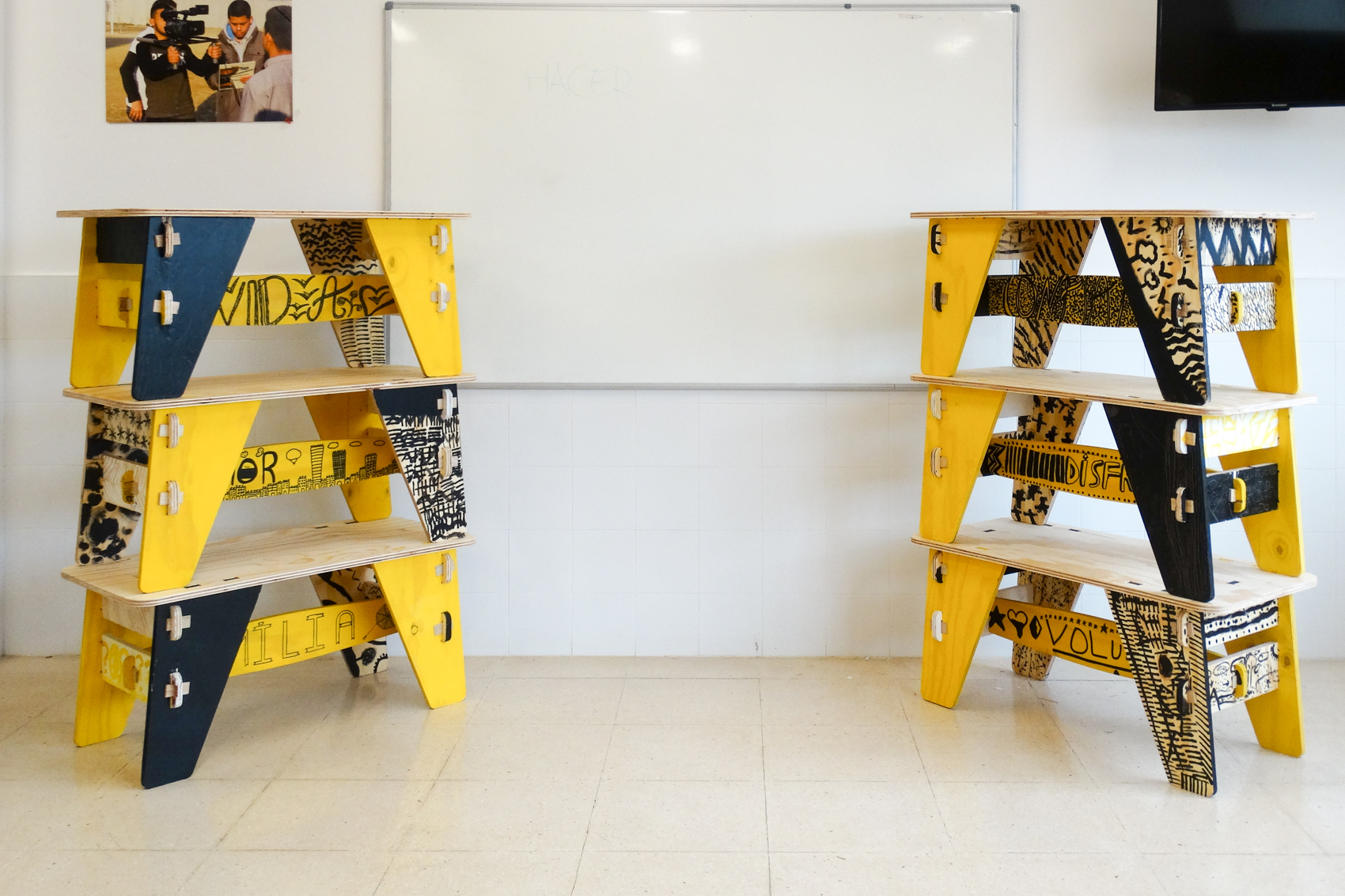
As part of the ACTIVA’T experimental programme run by the Catalan Government’s Department of Education, Makea designed and facilitated a collective furniture-making workshop. The aim was twofold:
- To provide the training classroom with functional and sturdy benches.
- To generate a practical and experiential learning process that would foster self-esteem, cooperation and reflection among participants.
To accomplish this, we designed a system of benches that were easy to assemble, did not require screws, and could be handled with basic tools, facilitating their construction within the prison.
The activity is carried out within the framework of the ACTIVA’T experimental programme of the Department of Education of the Generalitat de Catalunya, which aims to address challenges such as the fight against demotivation and absenteeism, the educational success of young people despite the loss of freedom, reintegration, family and social uprooting, the interconnection between projects, equipment and spaces, and the design of collaborative projects as activators that enhance teaching/learning experiences.
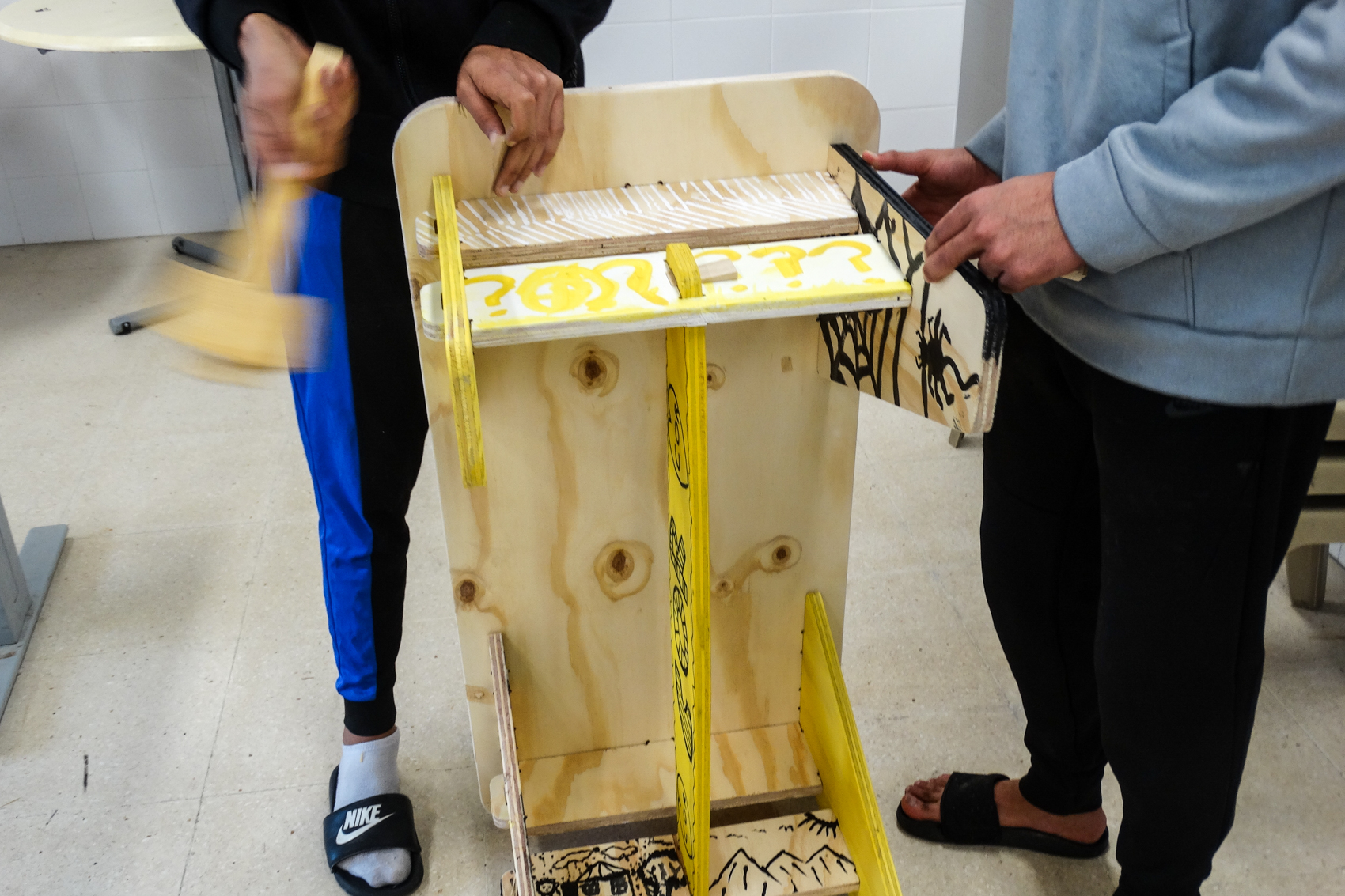
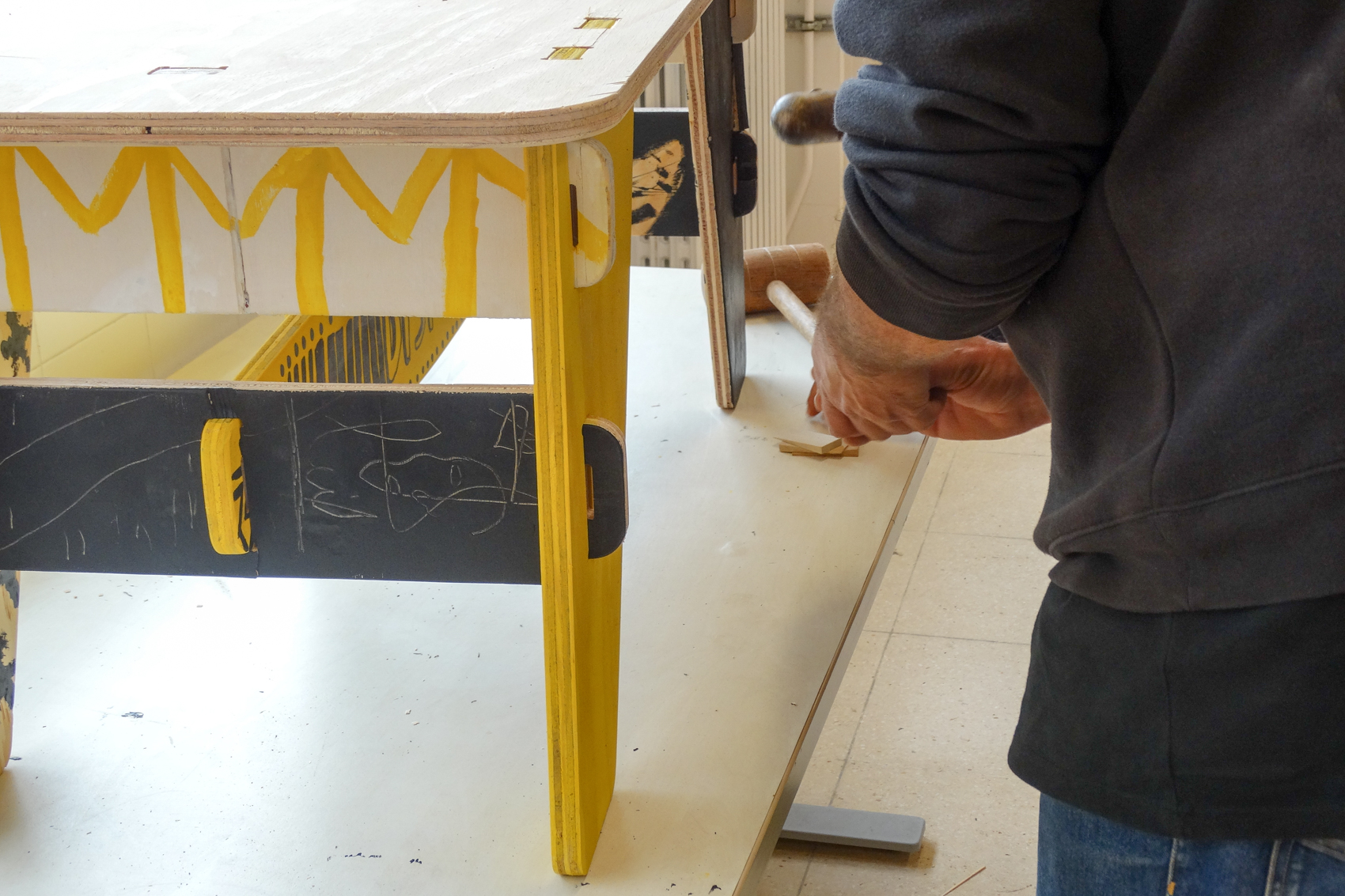
During November and December, we worked with a group of inmates from modules 3 and 4 of the prison. The furniture design was adapted to the conditions of the workshop:
— Pine plywood benches, pre-machined in our workshop using a CNC milling machine.
— Screwless assembly system, allowing for installation with only a hammer and sandpaper, simplifying the process.
— Collective construction within the centre, encouraging collaboration and ownership of the furniture by young people.
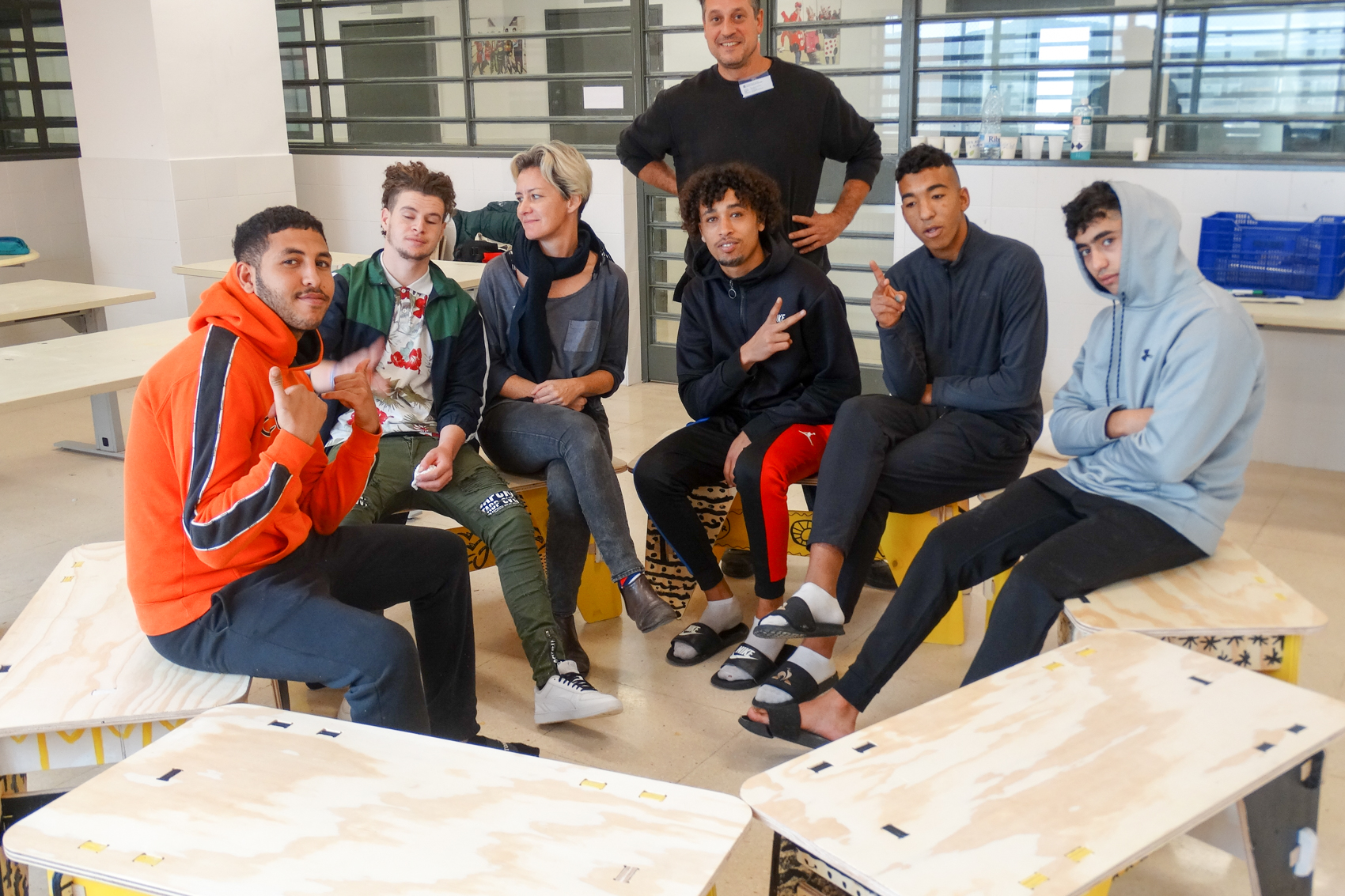
Beyond the construction process, the workshop became a space for dialogue and reflection. Through manual labour, topics such as identity, family, freedom and resilience were addressed. In an environment where clarity can be diluted, reframing the obvious and giving new meaning to concepts such as #family, #heart, #peace, #freedom, #strength and #life was an essential part of the process.
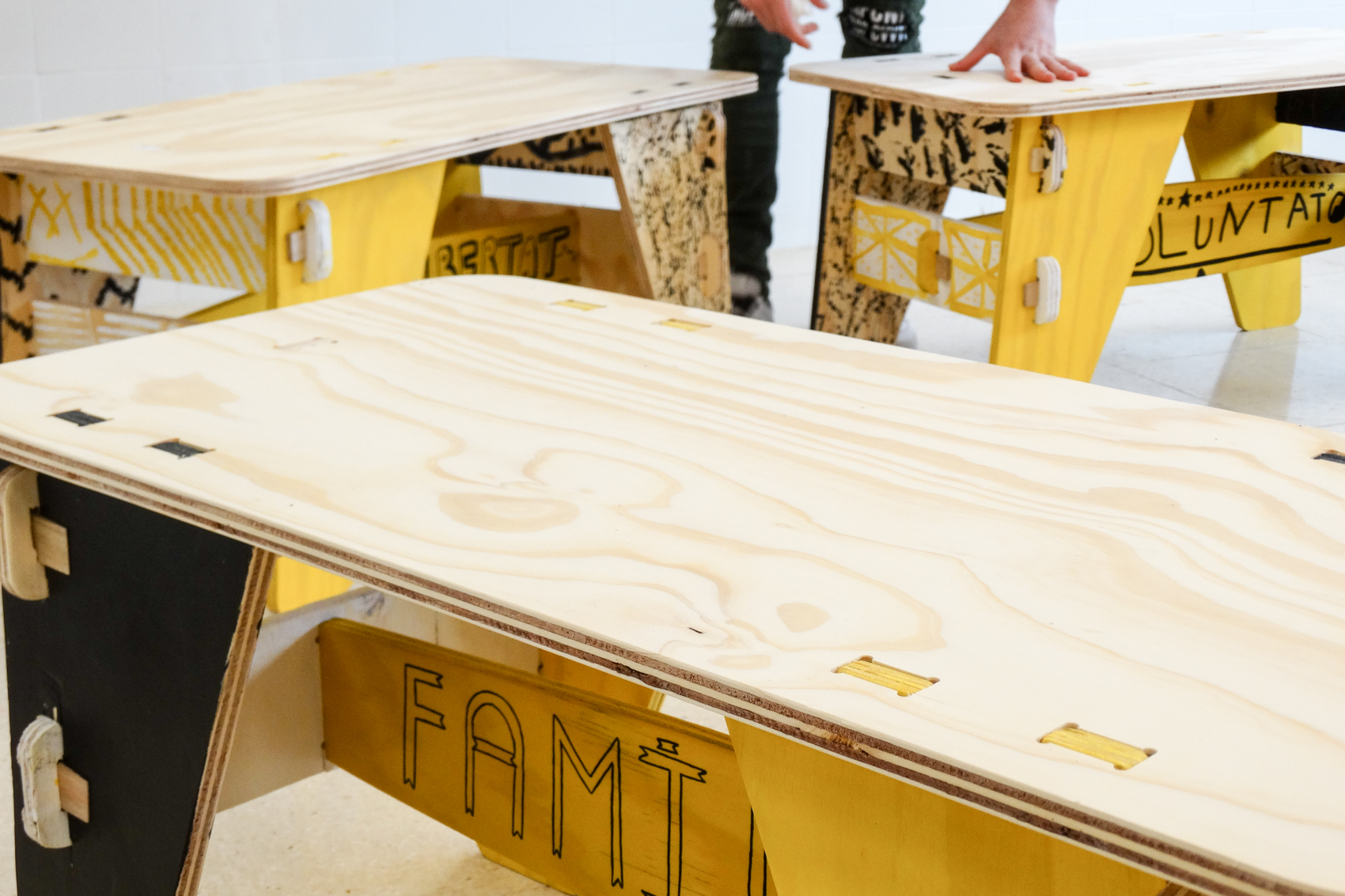
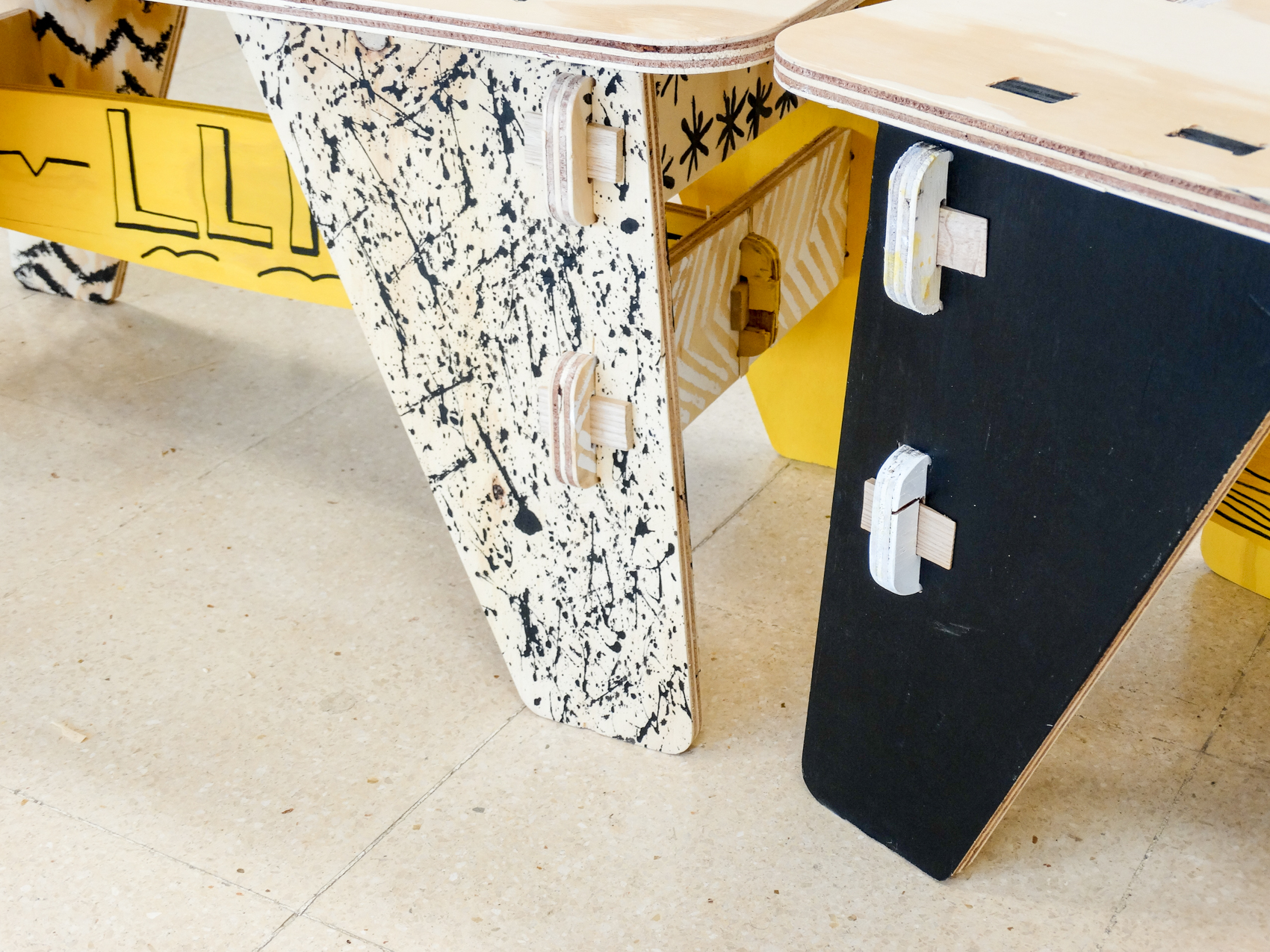
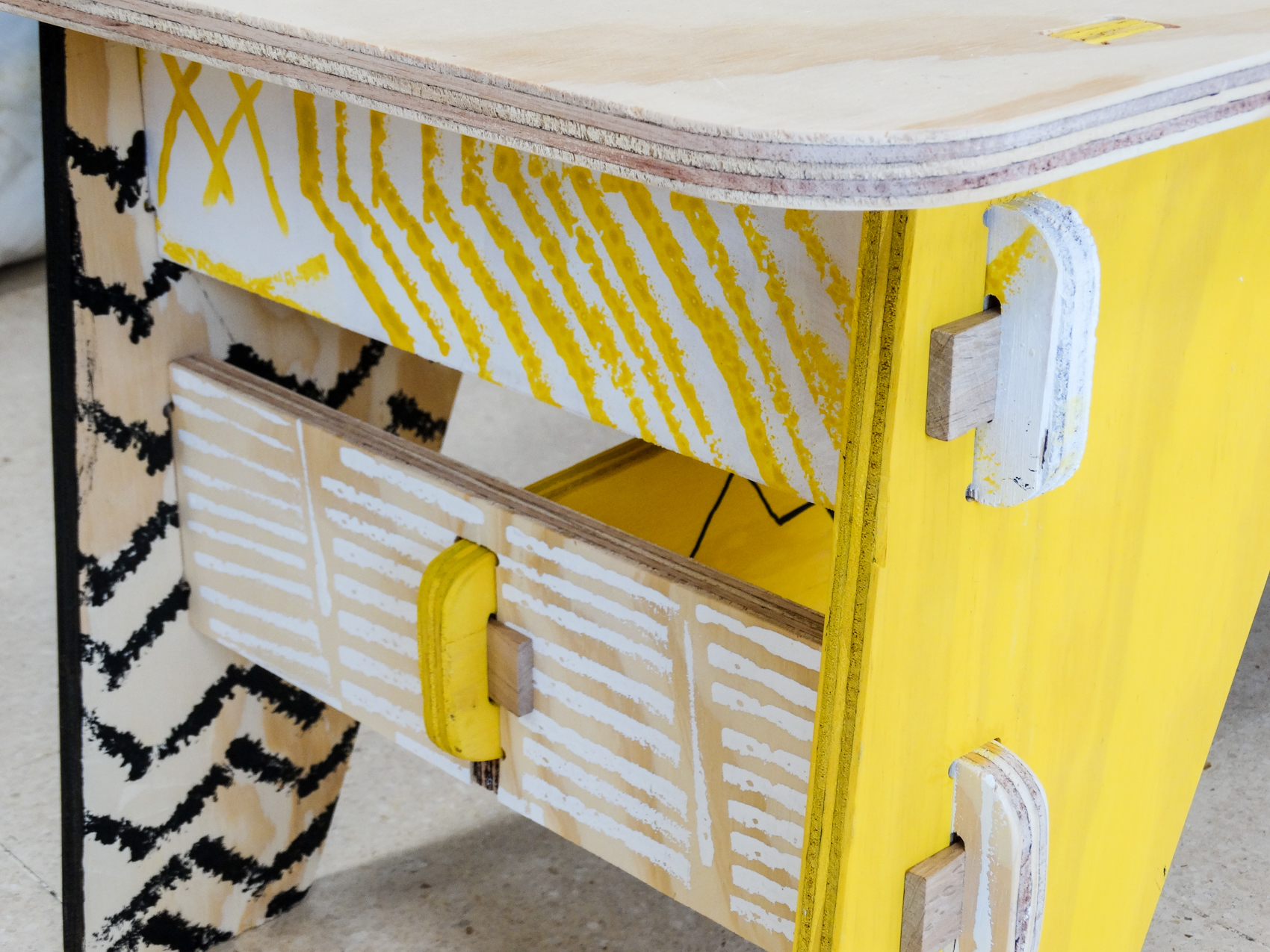
The workshop enabled not only the manufacture of functional classroom furniture, but also the construction of a learning experience based on doing, cooperation and introspection. The modular design of the benches reflects the process of life itself: assembling, disassembling and reassembling, adapting to new circumstances.
Through this intervention, the classroom furniture became a symbol of transformation and learning, providing participants with both practical and emotional tools to face their reintegration process.
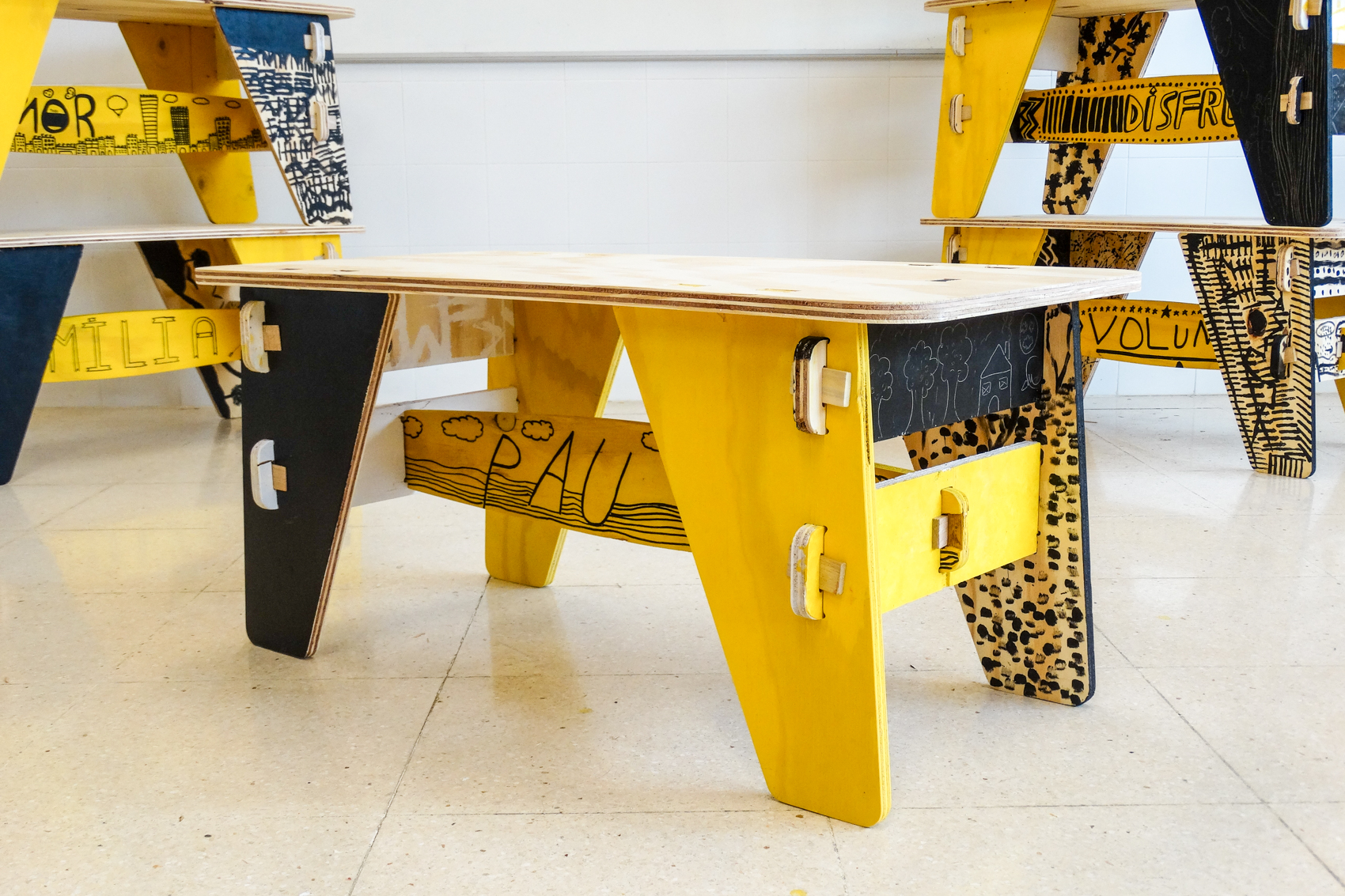
The model